LET'S MEET ONLINE

LET'S MEET ONLINE! Call (512)560-2609 or email helpimnotageek@gmail.com and set up a time for a session. It works really well. We talk on the phone while I see your screen.
Showing posts with label Facebook. Show all posts

Monday, April 20, 2015

Email Woes

Email can seem like a tyrant. If you don't read it the messages pile up until it will take you hours to catch up and you might miss an important message. Even when you read it regularly it can take over. 

I decided to go one whole week without reading my email.... and without sending a message or newsletter. Anyway today I am starting to read again and I have 602 messages in my personal account and 32 in my business email account. It is not like I shop online or subscribe to lots of lists. So what is in my email?

  • Facebook
  • Meet Up
  • Pinterest
  • Professional Organization
  • Austin Business Journal
  • Children's Defense Fund
  • Environment Texas
  • Change.org
  • Long Center for the Performing Arts
  • Advertisements - New Egg
  • A few personal messages from friends
  • Messages from my doctor
email lists in Facebook
Here is what I did with my 602 messages.
  1. First I scanned the content to see what I was receiving.
  2. Then I did an email search for the FROM line of messages that I no longer wanted to receive. Sometimes it came up with exactly what I wanted.  After found the messages that I didn't want used the checkbox at the top to choose all of the messages to trash and then clicked the trash can and they were thrown away. You can do this without marking them unread. Just delete them. It is so satisfying!
  3. Finally, I emptied the trash in my email. 
I know that everyone has different email programs that look a bit different and use different words, but all of them can do something similar. It may just take some searching to find out how it is done in your program. I use Gmail.

LEARNING ABOUT UNSUBSCRIBE
What I learned is that some organizations have MANY LISTS. Facebook is a good example. I learned that if I just searched for FACEBOOK I got all kinds of email in my list, but when I searched for Facebook birthday I only got back results when FACEBOOK was notifying me of someone's birthday. When I went to the message I unsubscribed from the FACEBOOK Birthday list, but I still have email from Facebook.  I guess as I go I will find the different lists and unsubscribe from them. I finally found all of their lists and unsubscribed from them. See the list above. I found it in the Settings on Facebook under Notifications.

Another interesting thing is that I get email regularly from TED talks. The FROM line says "This Week on TED". I tried searching using TED, but that returned email about a friend named Ted and other things. So, I put the whole phrase in - this week on TED - and I still got all sorts of results. Then I added quotation marks - "this week on TED" and up came a whole list of ONLY "This Week on TED" email. I was able to mark all of them and delete them easily.

I now plan to do this every 6 months to a year. I am not sure how I get added to all of these lists. Most of them are things I am interested in.  Maybe I signed a petition or put my email on a list for something else. Maybe they got bought my email from someone. For a few of them I know I have purchased something from their company. The point is that they keep increasing, but they are NOT what I define as SPAM. They are good organizations trying to communicate. It is just that I cannot take in that much communication and don't want to.

MARKING THINGS READ
I like the option of marking messages as read. That allows me to easily see what is new. On a daily basis I go quickly through my email using the right arrow at the top right of my inbox to scan each message. Most of them can be scanned and then discarded, but there are some that I want to read more carefully or respond to. I click on the star next to the messages that I want to keep. Each time I open a message it is marked as read. In Gmail and (I am pretty sure) in most email programs that means that the message goes fromBOLD to regular font. I can then easily go back to my inbox and put checks in the box next to the ones I have scanned avoiding the ones with stars and click delete or archive. Then, theoretically, once a day or once a week I spend more time taking care of the starred messages.


Thursday, October 2, 2014

Putting a Facebook or Twitter Icon on your Website

We have all seen the row of icons that lead to Twitter, Facebook, Pinterest, Instagram, YouTube, Foursquare, etc... They are found on sites where the company or owner of the site has accounts with social media platforms and they want you to go to them.

If you have a website and communicate on social media you may want to add these icons to your site.

There are two types. One will lead you to the Facebook page of the company on the website and the other is a share button that takes you to your own Facebook profile and creates a link back to their site so that you can share it with your friends.

These buttons can be added manually to your site and then linked where you want them to go. There are lots of sites that have free graphics of the buttons where you can go and download the ones that you want to use.

http://www.iconarchive.com/category/social-network-icons.html

http://line25.com/articles/20-free-social-media-icon-sets-to-use-on-your-website


These are two examples, but there are many more. In most website programs the steps for adding linked graphics are similar.
  1. You upload the image to the page and then insert it where you want it to appear.
  2. The program allows you choose the size and location (Right, Left or centered) of the image.
  3. When the icon is where you want it to be select it by clicking on it and look for the words add link or click on the picture of a chain at the top of the program. In a second tab on your browser open the website that you want to link and copy the URL. Go back to the tab where you are working on your web page and paste in the link. 
If you are using Blogger, Weebly, Wix, SquareSpace or one of many other websites where you can make your website the directions for doing this are part of the page. Here in Blogger it is one of the Widgets that I can add to the page. If you scroll down to the bottom of the page you will see it. 

USING A PLUG IN

The other way to make it easy for someone to share your page is to use a widget or gadget that creates code which can be put into your site. One of these sites is http://www.addthis.com/

After you sign up on this website for free you are able to choose between various looks for your buttons. When you are done a code is created and you can paste that code into your webpage.

You can go to Google and search for 'plugin', 'social media', and the name of the software that you would like to put it into (wordpress, blogger, etc...) You will be given many choices and hopefully find one you like!


Tuesday, April 15, 2014

Password Management and the Heartbleed Bug

You may have heard of the Heartbleed Bug. Here is the article about it on Wikipedia http://en.wikipedia.org/wiki/Heartbleed_bug

The Heartbleed Bug could allow a hacker to access all of your passwords. Experts in cryptography have called it catastrophic and rated it 11 on a scale of 1 to 10. Big companies like Facebook, Google, and Yahoo are plugging that hole and taking care of the bug, but since the problem has been around so long (maybe 2 years) your password may already be compromised.

In order to avoid any problems you need to change your password on all of the sites that you use. That is an overwhelming thought. 

PASSWORD MANAGEMENT SOFTWARE

I looked into Password Management Software. This type of software is often called a vault because all of your passwords are stored behind one strong password which is the ONLY one you will need to use. The software automatically gets you into sites because it knows your passwords. NO ONE except you knows your Master Password. It is not stored on a server somewhere. Even the company does not know it so if you forget it you also lose all of your other passwords. 

I also decided to read about the safety of using this software. What if someone figures out my ONE difficult password?  Then they will have access to all of the others. The articles that I read said that this will not be an issue. Dealing with passwords this way is MUCH safer than using the same password for many sites. 

HOW I SET IT UP


With Dashlane I first went to their site and downloaded the program to my computer. Next the program looked through my computer to find any passwords that were automatically saved in the computer. There were several. It automatically added them to the list. I tried out each one and found that some of them did not work or were for old things that I do not use anymore. 

It was easy to click on the gear icon and then delete these with the trashcan at the bottom of the window that popped up. 

On the other sites I followed the directions for "forgot my password" and then did what they said in order to reset my password. When I clicked on the space to put in my new password a window popped up and Dashlane offered to generate a strong password for me.
I clicked to indicate that a secure password should be generated and then I closed up the site and tried to access it again. It was great! Dashlane did everything and I was logged directly into the site!

It took a while and some trial and error, but now I am set up with Dashlane for several websites. Now each time I go to a different site where I need a password it will be generated and added to Dashlane!  I just have to remember the one difficult password that I start Dashlane with. It is not saved anywhere, so if I forget it I will loose all of my other passwords and need to start again! I am going to put it somewhere I will not lose it.


Here are several Password Managers to choose from:

Dashlane - So far I like this one. It was recommended on many sites.
http://www.dashlane.com

LastPass - I think this one is the most common. It is very good and it is inexpensive to connect your accounts on your iPhone or iPad so that they all sync together.
https://lastpass.com/

Norton Identity

https://identitysafe.norton.com/

RoboForm Everywhere
https://identitysafe.norton.com/

1Password
https://agilebits.com/onepassword

StickyPassword
http://www.stickypassword.com

Password Depot
http://www.password-depot.com/overview.htm


Wednesday, March 26, 2014

5 Things You Can Do to Make Being Online Meaningful (3-5)

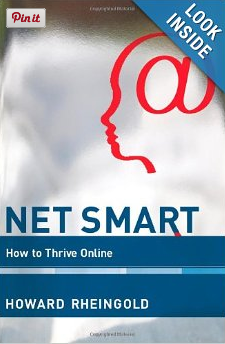
The last post talked about the book NetSmart How to Thrive Online. It lists five skills that the author recommends for making use of the Internet meaningful. Last post I talked about two of the five skills. They were Attention and Crap Detection. In this post I will outline the next three. I know that this is very different from my "how to" posts, but please put up with me and we will get back to those.


PREFACE
Our cultural expectations have dramatically changed. A small example of that is telephone etiquitte. It used to be that you did not call anyone too early or too late. It was rude. You might be interrupting their sleep, or they might not be at home. Message machines seemed so impersonal at the beginning. 

Today rudeness on the phone means not silencing a cellphone at a concert or talking on a cell when other people are in hearing distance. The hour you call and even if a person answers does not matter. The caller just leaves a message or texts. If you call someone at 3 in the morning it is no problem because you can just leave a message that they will get in the morning. Just like cell phone etiquitte, Participation, Collaboration and Network Smarts are important changes caused by technology in our lives.

Participation
It has become possible for everyone to publish what is important to them online in one way or another. In Facebook you can "like" something, you can bookmark favorite websites, you can comment on blogs, or if you want to do more create you own blog or website. There are so many sites like Facebook, Linked In, Pinterest, Etsy, Twitter, etc... that will allow you to publish your own thoughts and pictures on the web for the benefit of others.

If you participate you need to be aware of your digital footprint. Everything that you do online is permanent and you have no control of who reads it or copies and pastes it to their own computer. Hopefully you have all positive contributions that you are proud of. Your digital footprint shows you as a positive contributer. If you have posted some things that you are not proud of it is important to be active in publishing things that correct your digital footprint, so that anyone who views you online will more likely find your current footprint than what is history.

Collaboration
Collaboration used to be considered cheating, but now it is necessary. Wikipedia is a good example. When I grew up Encyclopedias were sources of fact. You had to have a special shelf for them and they needed to be updated annually. The speed of new information increased and Encyclopedias could not keep up. Wikipedia allowed anyone to write or add to an article there are now 30 million articles. Collaboration allowed extremely current updating of information. People in locations of a disaster can add an article to show what is happening right then. The article on Hurricane Katrina was very interesting to follow because it changed in real time. If something untrue were added someone could come and correct it right away.

Since just anyone can add to it Wikipedia cannot be trusted as a final resource for information (actually, even the Funk and Wagnels could not!) However, it is a great place to start researching a topic. Usually there are links to follow at the end of an article that will take you to other information also.

Wikipedia is just one example of how Collaboration can make use of the Internet more meaningful. The general term for sites that allow this type of collaboration is Social Media. There are hundreds of sites on the Internet now that fall under that category.

Network Smarts

The final skill that I am going to summarize is more difficult to explain. The new way of relating to people is in a network rather than in a group. Sometimes you do not personally know someone, but on a social network site you are able to help them with an answer to a question. Networks make paying something forward (doing someone a favor even when they have not helped you) really meaningful. By being someone who gives you build Social Capital and trust. 

Facebook can be an example of a network. You may see comments on your news feed that are not from people you know. You are connected to them only through someone else. How you respond to them can build Social Capital and trust.

It is important also for you to be mindful and to set your privacy settings so that you know who is seeing your contributions. You do not have total control and sometimes the privacy settings change, but it is important to know where you stand.

CONCLUSION
I know that these two posts have been more academic than most of my posts. It has helped me because at times I feel caught in changes that are going so fast. It helps to take time reflect and to be mindful of what I do online and how I help others. 


Tuesday, February 11, 2014

Snapchat and Instagram


The saying is that a picture is worth a thousand words. It must be true if you think about how popular pictures are on computers and mobile devices. Today I am going to talk about two apps for download to your iPhone, Android or Windows Phone. In some ways they compare to Twitter because in a very short time you can communicate to all of your followers. The main difference is that these apps both use pictures instead of text as their way of communication.


INSTAGRAM

Instagram has been around since 2010. In April of 2012 it was aquired by Facebook. Instagram is an instant photosharing app. When you open the app you can take pictures and instantly send them to one person OR to all of the people who follow you. You can set your profile to private so that only people you approve can follow you, or you can leave it open and anyone can follow you and see whatever photos you send out.


PROs

  • You can send photos you take immediately out to a bunch of friends at one time. So it is an easy way of sharing with friends or family.
  • A copy of each photo you have taken is kept in your profile, so you can go back and see what you took in the past.
  • You can delete pictures that you took in the past. At the bottom of each picture there are three dots ... When you click them a menu opens up that gives you the choice to delete, share the photo, copy and share the URL, email the photo and tag people who are in it. Each photo that is uploaded is kept on the Instagram server and can be accessed that way.


CONs

  • The photos you take and send are out of your control once someone else receives them. They have the ability of sharing it with someone else and even to put it onto their Facebook.
  • These pictures are not easy to print or even to save to your computer.


Why would people want to use this?

Receiving photos exactly when people have taken them is exciting and makes you feel more a part of their life. Teenagers like to send funny photos to their friends to make them laugh. It is also possible to edit the photo and write captions on it before sending it. (the picture at the top was taken when I was looking at a webpage on what age people should stop driving. I typed the words across it!)

SNAPCHAT

The guys who created SNAPCHAT were feeling frustrated by the privacy issues with Facebook and Instagram. The problem of photos being resent to others and downloaded and saved could cause a person problems. Even if you delete your account you never know if someone downloaded and saved one of your pictures and it will show up when you least expect it. These Stanford students (age 22 and 24) created an app very similar to Instagram, except that the pictures are only available for 10 seconds when the person who received them opens them up. The picture then vanishes and is removed from the server.  It is possible, but difficult to copy a picture that shows up for just 10 seconds.


PROs

  • A person can send a funny picture without worrying that it will be around forever. 

CONs

  • People can use it to send inappropriate photos (nude, etc...) that will not get them in trouble.


Why would people want to use this?

Like Instagram it is possible to send things immediately to friends or family when something is happening. You can send funny pictures that make you laugh without worrying that they might show up later and not be so funny.  


Tuesday, January 28, 2014

Apps for your new Device: 10 apps I use and several others to try!

Did you get a new device for Christmas? A device might be an iPhone, an iPad or any sort of tablet or phone that uses Android as an operating system. Because I use an iPhone and iPad that is what is highlighted in this post. Most of these apps have android versions.

Now is the time that you are probably looking for new apps to use on your device. Since there are so many this blog will just share a few favorites that you might want to try.

MY 10 DAILY APPS

I use my iPhone and my iPad several times a day. Here are the ways that I use them. 

1. I use the Clock in the morning for meditation. Once I start meditating I find that having a timer set helps me to focus on my inner self instead of what time is left. I also set it for an hour when I am with a client to help us keep track of the time we work together. I also use it as an alarm clock when I am traveling.

2. I use the Map function, either Maps or Google Maps, to figure out how to get to my next customer's house. I can even have it talk to me to tell me the directions as I drive. Once I even used it when I was already at the address I was supposed to be at, but could not find the building. By following the blue dot that showed where I was in relation to the destination I finally found it.

3. Of course I use it as a phone on a regular basis.

4. I use Messages to text my husband when I just have something short to say like, "on my way home"

5. When I am in a waiting room or flying and want time to pass quickly I play Angry Birds or Candy Crush Saga. These are the kinds of games I like, but there are tons of other games with better graphics and more action.

6. Gmail has an app that connects to my email, so if I am somewhere that I can't get it and need to I can access it. I find it harder to write back on the iPhone, but sometimes I do.

7. Contacts-I use this all of the time to find addresses, emails or phone numbers for people. I really LOVE the fact that it is with me all of the time.  I can add people into it easily.

8. Calendar-I use this all day to schedule things for the future, to see what I am doing in the next few hours or even to look back to see what I did in the past.

9. Grocery IQ - This is an awesome app that keeps my grocery list for me. I can put into it lists of items that I buy from certain stores and then when I am at the store it is easy to look and see what I usually buy there. I use it to make my weekly shopping list and then check off the items as I get them. I never write grocery lists anymore!

10. Lots of sites are websites that also have mobile apps. I use Yelp to find restaurants I am interested in going to OR to review services that I have used. Facebook has an app. These apps make working on your device a bit easier and help you skip the step of having to search for them on a browser

I use the iPhone all day. It has changed how I do things. As you can see, most of the apps that I regularly use came with the phone or are free to download. There are so many apps out there that I don't usually download anything that costs something.

Following is a list of other recommended apps that I found online with a few comments.

Waze - This is another MAP app that is free and comes highly recommended. It can also give you traffic warnings. It can be used in a social way so that others can see where you are driving and you can see their routes.


Shazam - This is an amazing app that can find the name of any music that you hear. It does have to be close enough to the origin of the sound to figure it out. I am in a coffee shop now and it is not able to find the music that is playing.  


i-nigma - By now you have probably seen those square marks that look sort of like bar codes. They are often on advertisements, but you see them all over now and they ask you to scan them for more information. These are QR-Codes. i-nigma is a QR-Code scanner. Here is one that I made with another app called QR Code maker.

Layar- This app lets you get an idea of what people who are using Google Glass might be seeing. It is sort of a futuristic app. Amazing and fun.


Lose It - This app can help you keep track of what you are eating, how much you are exercising and how your weight is changing. It works on calories and tells you the calories of food. It can read barcodes and enter the information from the barcode into the program. 

Tree ID - This is an app I downloaded to find out about a tree that I did not recognize in my yard. It walked me through the identification process. I think it is really handy to have.
Flashlight - This is not an app, but is a part of the regular operating system on an iPhone. If you slide up from the bottom after turning it on you are given a window with a lot of choices. Choose the one that looks like a flashlight and it makes the camera into a very strong light.


As I wrote this and looked for icons I realized that there are many more apps that I use often. There is just so much available!

Some of the apps in this post are from this New York Times article:
http://www.nytimes.com/2013/12/26/business/basic-apps-for-smartphones-and-tablets.html?hp&_r=0

Tuesday, January 21, 2014

Should I use 2 Step-Authentication?

WHAT IS 2 STEP AUTHENTICATION?

Authentication means making sure you are who you say that you are. Using a password is the main way that you are authenticated by most websites. But what if someone finds out your password. Google, Yahoo, Facebook and Twitter (and other large companies) have designed a way that you can have two layers of security for your accounts with them. First you have to put in your password. Second a random code is texted to your cell phone. When you get the message you type the code into the website and you are in. If someone has your password it is most likely that they do not have your cell phone also. 

NOW THAT YOU KNOW WHAT IT IS SHOULD YOU USE IT?

The more secure you want to be online the more important it is to use the two-factor authentication. You can set this so that it does not happen on your own computer, but only when you are using a public computer or one that belongs to someone else. 

In Facebook click on the gear in the top right to get the settings.  Then choose Security. Look down the list on the left until you see Log in Approvals. This is where you set up your phone to be an extra layer of security.


In Google after you log in find your picture, or the default picture in the top right corner. When you click on it a window will pull down and you should click on the word Privacy. This will open a webpage that will give you lots of information about how to be more secure. If you want to set up 2-step authentication slide down the page and click to "find out more about 2-step authentication. 

Follow similar steps to set this up in Yahoo, Twitter and other programs. The choice will be found in your settings under security or privacy. 

The more secure your computer is the more difficult it is for anyone, including you, to use it. I like the advice of Socrates "Know Thyself". How old are you?  How good is your memory? What do you use your computer for? How often do you use computers other than your own? Do you have a cell phone and do you use Text Messaging? 

For someone who uses a computer all of the time for business purposes or for regular banking it is a good idea to be as secure as possible even if it is frustrating sometimes. For someone who mostly plays solitaire and sometimes gets online to do email it may not be worth the effort. Then there are all of the many cases that fall inbetween. So, know yourself, is the best advice that I have. 

SOMETHING EXTRA

Since we are talking about security I thought I would also mention the Captcha Codes. Wikipedia says it stands for Completely Automated Public Turing test to tell Computers and Humans Apart. 

You often have to fill them out at the bottom of a form or application that you are submitting. They are getting more and more difficult to interpret. They were devised to make sure that it was a real person who is filling out the form. Today there are robot computers that can fill in forms and send notes, but they cannot read pictures of letters and numbers. 

If you cannot read the code on the page that you are on there is a speaker you can click on to hear the audio of the captcha. You can also press the circle arrows (or reload) to get a new code. There are several really tricky letters and numbers to read (L, l, I, and 1 for example), so never feel like you are stupid. You are SO much smarter than any computer.

Wednesday, September 18, 2013

What is a Hashtag and what do I do with it?


WHAT IS A HASHTAG?

I often hear or see something telling me to look for hashtag "#selected word" for something that is happening on TV or that I am reading about. Hashtag is a compound word with hash meaning the symbol # and tag meaning a descriptive word or created for one event or person. For example if you are interested in information on the president you can search for #obama in Twitter or other programs that use hashtags and a list of people who have put #obama in what they wrote will appear. This is a way that you can see what others are saying about something right now even if they are not on your "friend" list. 

Several sites are set up to use Hashtags for searches. Twitter and Facebook are the most common, but they can also be used in Linked In, Instagram, Google+ and other sites.

HASHTAGS IN TWITTER

Flooding in Colorado
This weekend there has been lots of news about flooding in Colorado. I thought I would see what I could find out from Twitter about the flood. I went to Twitter and typed in #floods and got a whole list of tweets about the flood. As I was looking at them 9 more appeared and the newest  one was from only 5 minutes ago. Hashtags on Twitter, Facebook and other sites give you a chance to see what people are saying about an event right when it is happening! People include videos, photos and links to articles on their tweets, so it gives you a chance to see what other people are saying about it as well as to see videos that are very current.

Obama's Speech
I missed Obama's speech on Syria, so I thought that I would look up the hashtag #obamaspeech #Syria and see what information I could find. I found that I could look at what was said by the top "tweeters" or by all (everyone) or by people I follow. At the far right side of each tweet there is a number which tells me how long ago this tweet was made. When new ones appear they come in minutes (5m, 1h or a date like 11 Sep).


Using Hashtags during an event
A new type of communication is happening through Twitter now when several people from different locations are all doing the same thing and tweeting what they think or what they are learning as they experience it. They often use a hashtag so that all of the tweets on that topic are searchable and it is possible to find the discussion later. At a conference for teachers who use technology people had the tag #iste13 and tweeted about what they were learning. You might want to try the hashtag #emmys next week when the Prime Time TV Emmy Awards are going on. Watch the Emmy Awards on TV and tweet your thoughts as it is happening or go to Twitter and search for the #emmys and see what others are saying!

HASHTAGS IN FACEBOOK
I thought I would try out the #floods hashtag on Facebook to see what I got. The comments it brought up were more personal and contained links to some helpful sites. I then took a look at my own Facebook to see if anyone used hashtags and did not find any. So, I went to one of my friends who I thought might use them and finally found one. It was #ilovenetflix. It took me to a few comments about Netflix, but not much of interest. My conclusion is that it is being used on Facebook, but not as much as on Twitter. 

HASHTAG TRENDING
Trending is a way of measuring what is popular at the moment. If you look at the first page on Twitter there is a column on the left that says "trending" and lists hashtags. This is the list of the things that most people are tweeting about using hashtags. The hashtags.org website is a good way to go and learn more about this.
http://www.hashtags.org/
The definition that they give for hashtags:
 "The primary purpose of a hashtag is to bring conversations on the same topic into a single thread to make it convenient for information consumers to view and compare ideas."


Tuesday, February 5, 2013

Ten Tech Skills That Everyone Should Have: Part One

This post is based on a blog that I read online a while ago. I thought it had some helpful tips, so I have edited it and added a bit of my own stuff. It was written by someone who was thinking about what students need to learn about using technology in school. We are all long passed school, so I wonder how many of these skills you feel comfortable with? Here is the URL of the post it is based on:

http://educationaltechnologyguy.blogspot.fr/2012/01/10-tech-skills-every-student-should.html


Do you know how to do an

effective Internet search?

Common Craft videos are a great, simple and fun way to learn things about technology. This one is about searching. It does have some extra words on it to protect people from downloading and using it because they make their money from people who subscribe to use the videos.

Common Craft Video on Web Search Strategies


Do you know how to create, edit, and save

documents, spreadsheets and presentations?


These are common uses for computers. Almost everyone knows how to create, edit and modify documents. There are many people who are unsure of themselves when it comes to spreadsheets or presentations. Most people use Microsoft Office to create documents, spreadsheets or presentations. 

There are other low cost and even free options now. Open Office is a free product that is very much like MS Office. You can download it for free and try it out. When you save your document you have to tell it that you want it to be a .doc so that anyone can open it. Otherwise it is automatically an Open Office document and can only be opened with that program. When I downloaded the newest operating system to my Mac none of my Intel programs would work. MS Office was one of the casualties. I have downloaded and used Open Office and it takes the place of word just fine. I have not tried it for presentations.

Another possibility is Google Drive. It used to be called Google Docs and was upgraded to Google Drive. The difference is that you can download a program to your computer so that you can access your Docs even when you are offline. A future post will have more about Google Drive. It has a word processor, a spreadsheet and a presentation software and some other things. All of your documents are automatically saved and you can even share them with other people and work on the same document collaboratively.


Do you know how to get help when you need it?


Recently I have learned that you can find answers to almost everything by just going to Google and typing in what you want to know.  I am soon going to do a post on maintaining your computer and so just to be sure that I don't miss anything important I am going to go to Google and type "computer maintenance". In the first page of links I will probably find links to some very helpful pages. The main problem with this approach can be that you do not understand what they are trying to tell you. If that is an issue here are some links to other sites that may be helpful.


This site is a lot of fun. It is posted as a letter to your parents where you send them videos about things that they may need to learn. You fill in all of the blanks and then press the PREVIEW button at the bottom and it takes you to where you can watch the video. This is a great way to learn and there are lots of choices of videos.


Can you type?


For the longest time I have been told that "soon people will not need to type because they can just talk to their computers." This has been possible for a long time and maybe sometime we will get used to doing it. Until then it really makes a difference in how fast you can get something done if you can type. Here are a few free programs you may want to try:


Typing Tutor - This one has games

If you want to pay for a great program my favorite is Mavis Beacon. There are many others. Just do a Google Search!


Do you know how to use Social Media

(Facebook, Twitter, YouTube, Flickr, etc...)?


There is so much to learn in this area. It is like an explosion. The Internet used to be static, meaning that it basically stayed the same. You could not change anything on the Internet. Now everything has changed. You have the power to add, comment, post, and change many parts of the Internet. The most popular is Facebook. Many people have gone to using it as their main way of communicating with other people. There are also many more. I am adding links to many of them. It is not the purpose of this post to explain how to use them all. If you would like me to write specifically about one of them or a part of one of them (more than I have in other posts) please let me know.


I have run out of time for this posting, so I will have to do the second five in the next post. Let me know what you think I may have missed and what you want to learn about!


Thursday, January 24, 2013

Facebook-Constantly Changing

I guess Facebook has to keep changing in order to be responsive to all of their customers. It can be frustrating to think that all your privacy settings are set up and then to find out that Facebook has changed around how it works. Recently, it seems to me that they have been trying to figure out how to make your experience using Facebook more secure without losing all of the possibilities for networking that is the central purpose of the program.

I just read an article from USA Today (a paper that I usually do not take too seriously) at 
http://www.usatoday.com/story/tech/columnist/komando/2013/01/18/kim-komando-facebook-settings/1827413/ 
It was sent to me by a friend and the article did have several good recommendations. One overall suggestion is that it is good to check your privacy settings every once in a while to be sure they are how you want them to be. 

Facebook has added a new link to the right of your name at the top that looks like a lock with three lines next to it. When you click on it and the window opens up you can answer three questions. Who can see my stuff?, Who can contact me? and How do I stop someone from bothering me? Under these three questions is the link to See More Settings. When you click this it will bring you to a place where you can go into each one of your privacy setting areas and make changes. To make a change to them you click on the EDIT link, type in your changes, and then close the window. 


There is also a link here for looking at your own profile so you can see the way it looks to someone else who comes to your page. That is really helpful because you can get a feel for what people are seeing about you and decide whether you want to be more private or more public. 

To get there go to your privacy settings and look for the words "view as" in this view you will be able to see what people coming to your page see and also check if it is different for the public, your friends and friends of friends.

I suggest you take some time to click through these things and see what you think about the way your Facebook is set up. If this does not make sense to you or you have more questions please do add them as comments to this post and I will get back to them.


Tuesday, September 18, 2012

To Post or not to Post?

Allison Morris saw the earlier post in this blog about posting to Facebook and kindly offered an infographic about the same topic which I have put below. It is from http://OnlineClasses.org. I like that it was copyrighted under a Creative Commons License so that it can be shared as long as they are given credit. It is good to be aware of this so that you can be careful about copying things that may be copyrighted and so not free to use.

Info Graphic about posting on Facebook

Look at their site to find the original.