LET'S MEET ONLINE

LET'S MEET ONLINE! Call (512)560-2609 or email helpimnotageek@gmail.com and set up a time for a session. It works really well. We talk on the phone while I see your screen.
Showing posts with label storage. Show all posts

Thursday, December 6, 2018

Is your Mac Running Slowly?

IS YOUR MAC RUNNING SLOWLY?

Maybe it needs a clean up of large files.  If you have the Operating System called Sierra there are several features to do that for you!
  1. To find out what operating system your computer has click on the black apple in the top left corner and choose About this Mac. The window will tell you what operating system you are using.Mac storage
  2. Now click the storage tab. Wait a second and this will tell you how much storage you are using. 
  3. Now choose Manage.  This will show you things you can set up that will maximize your storage space.
manage storage
  1. Store in iCloud -  This will save some space on your computer, but you may have to pay for extra space on iCloud.  5G comes free with you iCloud account and it is about $1 a month for more 50G more.
  2. Optimize - This dumps iTunes videos you have already watched and deals with email attachments differently.
  3. Empty trash automatically - permanently deletes anything in the trash more than 30 days.
  4. To me the most interesting was Reduce Clutter -  It goes through your machine and gives you a list to review all of the large files on your computer. You can the keep, delete, or transfer them to a CD or Thumbdrive. I think I could spend hours on this, but I won't because I am not short on space!
list of files
If you have an older mac there are programs that you can download that will do similar things. Some names are: CleanMyMac 3, Gemini 2, Disk Cleanup Pro and Dr. Cleaner . It is a good idea to type the name of the program with the word review in you browser and read the reviews before you download. Always back up your Mac before using software intended to automatically delete files on your computer — just in case.

Friday, October 23, 2015

My Mailbox is Full - Now What?


Most email messages don't take up lots of space. What does take a lot of space is images which can be in advertisements or as attachments in messages from friends and family. 

One first step would be to create folders for the email that you want to keep and to delete the ones you do not want to keep. When you delete mail it goes into the TRASH folder of your email. Mine is set to empty automatically every 30 days, so that keeps space from filling up. 

Since every email program is set up a little differently here are a few tips to help you set up folders.

  • Look for the words "Manage Folders" 
  • In Gmail folders are called Labels and in order to make a new one you have to open an email message first. At the top of the screen next to the word "more" is a picture of a Label.
  •  When you click that it gives you an option of putting the message in a label already created or creating a new one. When you create a new one it shows up on the left side of the email page.
  • To check how often your trash empties or if it empties automatically look for a GEAR and click on it. Somewhere in the list that comes up you will see "settings"
  • Click on Settings and look for the trash settings. Change them to what you want them to be.
In Gmail folders are called Labels

This is a Gear. you can find Settings when you click the Gear.

One other thing you can do is to save email that you want to keep to your computer and delete it from your email. This is called Archiving your mail. In Gmail when you click to archive your mail you can find it again by searching or if you open All Mail. It is stored on the Google server and there is lots of space for it to go to.

In Outlook you can actually create a file to hold your archived mail. Right click on the "On My Computer" heading at the bottom of your folder list and choose New Folder. Name the folder Archived Mail or something like that. Now you can move messages into that folder or create a Rule that will automatically move messages to the archive after a certain time. 

Setting up a rule is also called filtering in Gmail. In some email setting up Rules is under the Tools menu. In others you will find the words "filter" or "rules" in the Settings. A rule is a sentence like  "When a new mail arrives"__________________ and then it gives you several choices for what to do with that message, like "move to archive folder" You also usually have to fill in a few more things like when it should be done (i.e. after 120 days) Once you have the rule created you usually have to click to enable it.

With Gmail archived messages can be found by clicking on All Mail. All Mail getspretty full, so you may have to search for the message that you archived using a word from the message or the email address of the sender. With Outlook you are moving your messages from the server to your own computer. You should be able to find the folder called Archive in your Documents folder.

If you have a lot of mail with photos that you want to keep it is better NOT to keep the photos in your email. When you get a picture in an email message you can right click on it and choose Save Image or Save Target. Your computer will open up a window and you can choose the Picture file for your photo to be saved in. Be sure to rename it because pictures are often named things like img566.jpg and you will not be able to tell by the name what it is later. 

Once you have saved all of the photos from your email, delete the messages and it will create more space.

Monday, October 5, 2015

HELP - Dealing with Photos!

I know that I have written on this before, but it just seems to keep changing and being difficult. Apple updated its system for dealing with Pictures from iPhoto to Photos and it has taken me quite a while to figure out what to recommend to people.

First of all, I think it is always good to follow directions to update a program whenever you get that message. It will keep your computer running faster and keep you up to date. One of my clients had an iPhone with the new Photos program and still had iPhoto on her iMac because she had not updated to Yosemite. That was confusing. It is a bit clearer when you are dealing with the same program both places.


We, older people, have an outdated way of thinking about photos. Computers and digital photo taking has totally changed how it all works. It used to be that you had film with your originals and paper copies of your photos. You could hold them in your hand. You could lose them or they could get mouldy in the basement. You could put them into albums or boxes. You could pass them on to your children.

Now, they seem sort of ephemeral. Where are they really? How can I organize them and keep from losing them? It is so easy now to take pictures that we all have SO many of everything and often there are multiples or pictures that we don't want to keep, but who has time to go through them all?

SOME ADVICE

Use the 3, 2, 1 principle of saving pictures and videos that you really want to keep. Have 3 copies saved in two places and put one in a safe deposit box or offsite somewhere that you can access and update once a year, or on some regular basis.


Three copies of any picture that you really do not want to lose should be saved. One is your primary and two are back ups. 

Two copies should be on different media. Do you remember floppy disks?  Most computers today do not have floppy disk drives, so you cannot access them any more. The CD drive is going the way of the floppy drive, so it is possible that if all of your copies are saved ONLY on CD you may not be able to access them easily later. So, you could have one copy saved on a hard drive and one on a CD. Or you could save one on your computer and one in the cloud. I think I might keep one on my computer, but have two external drive backups. One of them would be my regular back up that I keep at home and one ONLY has photos and is kept in a safe deposit box at the bank or something.


One is kept offsite somewhere. If there is a disaster at your house and you lose your computer and your backup at least you will have a copy of everything that you last backed up in another location.


http://www.dpbestflow.org/backup/backup-overview#321 tells more about this and explains it as a way that ALL important files should be backed up. DP stands for Digital Photograpy and this comes from the American Society of Media Photographers, so it may be overkill for us home picture takers, but it is helpful information.

MAC
Like I said above you should always keep all of your devices up to date so that they are using the same software, especially if you want to sync between devices.

The new software called Photos does something interesting. It will hold up to 1000 photos and as you add new photos after that it drops off the oldest ones and only keeps the newest. When a photo is deleted from your phone it is deleted from all devices that are syncing to it. You can turn on iCloud storage if you want to keep photos. This will give you 5G of storage space for free. If you want more you can pay for it

What if you want to store your images forever (or as long as possible)? On the Mac help page it says:


iCloud Photo Library stores all of your original photos and videos in iCloud, but we always recommend you keep back up copies of your Library. You can download your photos and videos from iCloud to your computer and store them as a separate library, transfer them to your computer with iTunes, or store them on a separate drive.
You can go to http://icloud.com to see what photos are stored there. If you want to do something with those photos you can click on them. Once a picture is open you can share, delete or download it. If you want to do this to multiple pictures choose the word SELECT at the top right of the screen and you will be able to put a checkmark in the ones that you want to act on. 

If you don't want to spend more money on photo storage there are lots of options. You can download them to your computer and save them in the Pictures file. One thing lacking in the Pictures file is automatic organization. You have to put pictures in folders and organize them yourself. You can then save them to an external hard drive, or two. You can upload them to an online storage space. Amazon Prime offers unlimited storage space for free and so do many other places. See information on Picasa and Flickr below.

PC
There are many programs that store photos. The one that comes with your PC is called Windows Photo Gallery. Photo Gallery can find all of the pictures in your Pictures file and automatically store them in folders by date. You can then go in and do all sorts of things with your pictures. You can reorganize them into different files, edit them, give them tags or keywords so that they are easy to find.

There are other programs online and that can be downloaded to your computer that do similar things. Picasa is owned by Google and now works with Google Photos. It has an online feature and you can download a program for your computer that will sync with it. It gives you the ability to organize and edit your photos. Shutterfly, SmugMug, Flickr (which is owned by Yahoo and requires a Yahoo login).

Helpful article on Photo Storage
http://www.theverge.com/2015/4/29/8467289/cloud-photo-storage-comparison-dropbox-icloud-flickr-onedrive-free

So, what am I going to do?......  Someday when I have lots of time I am going to organize all my photos. I think I will get two hard drives. On both of them I will upload ALL of my photos. On my computer and my phone (and iPad) I will have the same set of the most current photos in the photo program so that I can look at them and easily use them. Then once a year... September?, January?, my birthday? I am going to get the second hard drive from the safe deposit box (or where ever I decide to save it) and update BOTH hard drives and keep just the current year on my computer, phone, and iPad. Someday..... but then I still have VCR tapes waiting to be converted and cassette tapes that need conversion. 

Monday, September 10, 2012

How to Back Up your Computer

The best way to learn how important it is to back up your computer is to lose everything once. Most people have to go through that in order to learn, but not YOU. Starting today you are going to be careful about regularly backing up what matters to you.

WAYS TO BACK UP
1.  Put everything that you want to back up on "the cloud".  A good example of this is Google Drive. The slogan that they use is "Keep Everything, Share Anything". 

This is the easiest way to back up, but remember that whatever is put onto Google Drive is actually being put on a Server (a type of computer) somewhere owned by someone else.

I am very aware that much of what I am working on is already kept on "the cloud". I use Blogger.com to write this blog and so all of the content that is here is kept on a server somewhere that Blogger (actually Google) owns. I also have some pictures online using Flickr and some with Picasa. I often use Google Docs and whatever is done there is "on the cloud".

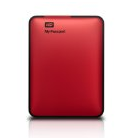
2.  Get a separate hard drive that you can plug into your computer and create a back up.

Of course if you back up using a hard drive it is important to realize that the hard drive should be kept in a different place than your computer. If there is a fire and you lose BOTH the computer and the hard drive, the back up will not help much. Some people recommend that you have three copies of everything (a double back up) so that at least one copy will be left if something happens. 


Most computers have a back up utility that will help walk you through the process. It is different for every computer, so I will not try to explain the details of how it works. You can either use the Utility that comes on your  computer or you can purchase a program that will walk you through the steps for backing up. I will give you one example, I use Time Machine on my MacBook.

I have purchased an external hard drive. The first time I plugged it in I opened the Time Machine program on my Mac and set it up to back up on that drive. Now every month or so I plug it in and my Mac automatically copies everything to the External Hard Drive. Time Machine backs up all of my programs, settings and data files on my computer. If something happened to my computer I could remake it with the Hard Drive. I really don't have to think about it much and it is easy to do. If I kept it plugged in all of the time it would do regular backups every hour.

In some computers the Utility (built in back up program) may be confusing, so it may be better to purchase a backing up program (something similar to Time Machine, but for PC) so that it will do the steps for you and make it easier. 

Some recommended programs that you can purchase for backing up your computer are:

http://data-backup-software-review.toptenreviews.com/ - This site reviews the top ten back up softwares for 2012.

http://www.pcworld.com/article/148765/save_your_data_with_one_of_these_top_backup_programs.html
This long URL may need to be copied and pasted into a browser to work. It is an article on PC World talking about 5 of the best Back Up programs.


Some places you can get external hard drives:
Go to these sites and search for external hard drive.
 
Amazon.com - http://www.amazon.com/

Newegg.com - http://www.newegg.com/

Office Depot - http://www.officedepot.com/

Best Buy - http://www.bestbuy.com

External hard drives come in different sizes. Some are in Gigabytes (GB) and some are in Terabytes (TB). All of the drives that I looked at came in at least 350 Gigabytes. That is plenty of memory for backing up most computers. If you are doing podcasts or making movies you may need more memory.

Wednesday, September 7, 2011

Save those Photos and other things from Fire

In Austin, Texas this week we are dealing with fires that are out of control. I read somewhere this morning that over 800 houses have burned down. That makes me sad and thoughtful. Two weeks ago my son's apartment in Chicago burned down (http://www.indiegogo.com/Dan-Friesen-Fire-Relief-donation page set up by his brother has links to news articles about the fire). When Dan's apartment burned I did not think about it much. I was concerned more about him and did not apply it to myself. Now that much of Bastrop right outside of Austin is burning I am starting to think about me, especially since it is so smokey outside. What have I done to think about dealing with fire?

There are lots of websites that offer help with what to do in general - http://www.statefundca.com/safety/safetymeeting/SafetyMeetingArticle.aspx?ArticleID=43, but this post is about how technology can help you.

As I write I am backing up my computer. I have a small hard drive that plugs into my computer and keeps a copy of everything I have on it. I think I may start carrying that in my purse. It is very small and has so much information on it. Even if I lose my computer I would still be able to get a new one and put back on it the things that I have stored. Even better much of what I have is actually saved on servers somewhere else. Any time I need to go to a website and log in I am usually saving things on "the cloud" (or actually some computer somewhere). Even if my house burns down and I lose my computer and my hard drive I can still get to those things.


That brings to mind two programs which are extremely helpful:  Flickr and Picasa. I will talk about Flickr today and Picasa tomorrow. Both of them are Photo saving websites where you can upload your photos for FREE. If there is a disaster you can still get your pictures back using any other computer.

http://www.flickr.com/ 
Flickr allows you to upload 300 mb each week for free. When you have gotten to that limit you must wait until the next week to upload or you can pay $25 annually for a pro account. When you upload a picture here the program automatically resizes the file to several different sizes so that it is not too large for the web.

One of the first things you want to do is to set up your privacy settings. After you have logged in you can find this by clicking on your name in the right top corner. You can choose to share your pictures or to make them private. If you make them private they will not show up when someone does a search. There are also very detailed settings in your account where you can allow some photos to show and others not, or maybe allow them to show, but not be copied or printed.


When you open up Flickr you see a greeting in a different language each time! The program starts out on the Home page where you can either go to your Photostream to see all of your pictures or to Upload Pictures or Video where you can do the uploading.

There is a lot you can do with your photos in Flickr which I could talk about on a different post. You can organize them into galleries and sets and you can mark them with lots of information like locations, names of people and tags.

Since the focus of this post is on saving important things in a fire the main thing is this: If you upload your pictures to a site like Flickr can be retrieved.

If something happened with all of your photos they will still be on Flickr. You may want to download another back up copy of all of them. This is not easy to do in the size of the original, but it is possible. If something like that would happen you may need to use a third party piece of software to do the whole download. If you want just a picture at a time it is not a problem.

Tomorrow I will look into Picasa and compare the two. There are other Photo saving and sharing sites so if you know about one that should be mentioned please comment.